Tag: selective breeding of honeybees

  • Open Mating Queens

    Open Mating Queens

    It should be fairly straightforward, shouldn’t it? A colony makes several virgin queens, eventually whittles them down to one, and she flies off on several mating flights. She returns to the welcoming embrace of her workers, and begins the long process of laying hundreds or thousands of eggs every day during the summer, autumn, and spring. This is the strategy that honey bees have come up with, and they have been around a lot longer than humans, so it has proven to be successful.

    Elusive Perfection

    However, nature being what it is, not every queen’s story is quite so uneventful. As I frequently say, there is a lot of death and failure in nature. As beekeepers, many of us like to think that we should be achieving at least 90% ‘success’ in all that we do. Ideally, 90% or more of our colonies come out of winter strong and ready for explosive growth. Hopefully, by the power of skilful and observant beekeeping, 90% of our colonies won’t swarm, and if we make queens, 90% of grafts will produce viable cells, and 90% of our virgin queens will successfully mate. Well, for me, this is not the case. Every so often it is, but on average, it’s worse than that. On the plus side, my bee farming business pays for itself, including running a van and availing myself of the unique services of a beekeeping mole (my son, Alex). You don’t have to be perfect to be successful.

    Mating Failures

    I’m going to try to quote the odd study to give the veneer of legitimacy to much of what I say. However, the longer I keep bees, the more I suspect that there is a broad spectrum of honey bee behaviours, and researchers probably struggle to show more than a glimpse into the world of the bee. Just because something can’t be backed up by a study doesn’t mean it’s false, and just because a study says one thing, doesn’t mean it will always apply. That being said, some studies indicate that the open mating of virgin honey bee queens is successful about 70–80% of the time (20–30% loses).[1][2]

    As the ’80/20 Rule’ (Pareto principle) seems to apply to many things, let’s go with that, and say that 80% of open matings work out and 20% fail. That means that 20% end up hopelessly queenless. Without intervention, they become laying workers and eventually dwindle away, their demise possibly being hastened by robbing from other bees or wasps. I think something similar, but flipped, may apply to swarms; around 80% will die and only 20% survive[3]. So, if five colonies swarm to produce ten colonies (five parent colonies plus five new ones), four of the parent colonies would be expected to survive along with one of the swarms, bringing us back to five colonies. This would imply a honey bee population in a steady state (neither growing nor declining).

    Anyway, back to mating success. It all depends, doesn’t it. Under certain ideal conditions, mating success can approach 100%, and in diabolical conditions it can be zero. Averages are all very well, but they don’t help me in my specific location/conditions at a particular time. If I’m staring at the ruined combs of a colony full of laying workers, I don’t care what some study says – I care about how to reduce the chances of it happening again. What are the factors that make the success rate fall? Here are some, in probable order[4] of influence:

    Weather

    This is beekeeping, so obviously ‘weather’ is going to rear its heads. I think of the weather as being akin to the Hydra of Greek mythology, but maybe I’m odd. Low temperatures, cloudy skies, and strong winds all play their part in reducing the likelihood of queens (and drones) taking mating flights. Evidence from work in Germany using RFID to track mating flights[5] shows that, although more mating flights occur above 18°C than below, they still happen as low as 16°C. It seems that in cooler conditions queens have more frequent mating flights of a shorter duration, whereas in warm weather flight duration is longer, but fewer flights are made. Strong winds produce higher risks to the young queen, so she may not fly in such conditions, and may be more likely to fail to return.

    Drones

    People who spend their days instrumentally inseminating queens, and trying to control mating using isolated places and drone-donor colonies, tend to place great importance on both the number and quality of drones available. They are critical. Some might even say, more critical than the virgin queen herself. An average queen inseminated with lots of top quality drone semen will be a far better queen than a beautiful virgin that mates with too few drones, or drones with below-par sperm counts.

    What we want is lots of healthy drones in the vicinity (within a 1 km radius) of our mating apiary. They should be well nourished, sexually mature, and from a different genetic line to the virgin queens. Varroa mite infestation, and associated viruses, reduce the fitness of drones. However, chemical varroacides can damage their sperm. Treatment should therefore be done before drone rearing takes place – maybe oxalic acid when broodless in winter is the answer. According to Coloss[6] there should be eight drone-donor colonies for 50 virgins (a drone donor colony is a normal colony with 2 drone combs). You need to plan the grafting time to coincide with when drones have emerged and become sexually mature, which is two weeks after emergence.

    So, make sure you have enough drones, and look after them!

    Time of Year

    This season (2025) has been unusual, with everything coming early, and I did my first grafts on 14th April. Normally, there is a window of opportunity that is best for making queens, running from when swarming starts to sometime in July. The reason is a combination of weather, drone availability, nutrition (pollen and nectar), and bright daylight conditions allowing mating flights even after 5pm, with several in a day. It is possible for queens to successfully mate late in the season, even in September, but most commercial queen producers stop in August. Late supersedure queens frequently turn out to be drone layers.[7]

    Apiary Density

    This can be too low or too high. In low hive density areas, you may have to provide the majority of the colonies that produce the drones that your virgins mate with. This is great for being able to control breeding, but it is a rare situation in most of the UK. In areas with very high hive densities, there is no shortage of drones, but you have little control over which ones mate with your queens. However, there are other issues with numerous bees in a small area. Perhaps there is inadequate forage to support all of those colonies throughout the season, leading to underfed larvae and weaker drones. Moreover, the risks of diseases spreading are significantly increased, and viruses can damage queens, drones, and workers.

    Map from NBU showing number of apiaries by 10km squares
    Map from NBU showing number of apiaries by 10km squares

    If I could wave a magic wand and have my choice, it would be for a low hive density. As it happens, my bees are typically in places where there are plenty of other hives. According to BeeBase, the ‘apiary density within 10 km’ ranges from 219 to 336 for my apiaries, which seems like a lot. However, the maps feature on the same website shows something more believable i.e. 57 to 149 apiaries and 148 to 269 colonies.

    Location/Micro-climate

    Some places do better than others as apiaries, and that includes mating apiaries. Perhaps it is to do with the topography, landmarks, degree of shelter or other factors. Some spots seem to enjoy a microclimate that is always a bit warmer and less windy than surrounding places.

    There is also the matter of hive (or nuc) location and orientation within the apiary. Anything that can be done to reduce the chances of a returning queen ending up in the wrong hive must be positive. That includes differentiating hives using colour and patterns. Brother Adam’s mating hives were split into four compartments, each having an entrance at 90 degrees to its neighbour.

    An old Brother Adam Mating Hive
    An old Brother Adam Mating Hive ©Steve Donohoe

    Wasps & Birds

    Once wasps become a pest, and start bothering honey bee colonies, things get a bit tricky. They tend to find weak colonies, then hammer them relentlessly. Mating nucs are usually weak colonies. I combine my mini-plus boxes into double or trebles to ensure that they are strong enough to keep wasps at bay.

    When queens disappear, it is easy to blame it on the countless swallows and martins that continually swoop upon insects throughout the summer. I think it happens, in some areas more than others. At one of my apiaries where I have had significant problems with missing queens, there are a great many swallows, and I think they are swallowing my bees. Apparently, in some locations, dragonflies are also partial to a slow flying virgin queen. The RFID study[5] tracked 64 queens on mating flights and 11 of them failed to return, for whatever reason.

    Drifting

    We know that bees drift, especially when hives are set up in a long line. In such an arrangement, you will often find more bees (and honey) in the hives at each end of the row, and smaller colonies in the middle. We also know that queens can end up returning to the wrong hive, which usually results in their death. Given that any hive can swarm, and will therefore need a new virgin queen to become mated, it makes sense to try to help queens successfully return. Place hives in clusters rather than long rows, and differentiate their appearance in some way.

    Research[8] shows that honey bees have three spectral types of photoreceptors peaking in UV, blue and green parts of the spectrum. So, they can clearly differentiate between UV, blue, and green. We cannot see UV, whereas bees cannot see red (it looks like black to them). The three receptors have their peak sensitivities at the following wavelengths: 344 nm, 436 nm, and 556 nm (please click each wavelength to view the colour). From what I can tell, the research indicates that bees respond more strongly to the shorter wavelengths than longer, i.e. blue more than green.

    Chart showing photosensitivity of bee eyes to different wavelengths of light
    Photosensitivity of bees to different wavelengths. Chart from https://pmc.ncbi.nlm.nih.gov/articles/PMC4035557/

    In terms of shapes, bees can clearly identify parallel lines, alternating black-white-black-white etc. Furthermore, they seem good at spotting radial symmetry[9], such as the shape of many flowers, or other radial shapes like stars. We can use this knowledge to mark hive entrances and lids so that the bees can clearly tell them apart.

    Inspections

    Most mating flights start with orientation flights around midday to 1pm, then the actual mating flights from 1pm to 4pm (or even later). Therefore, if you have a hive or nuc with a queen likely to be taking mating flights, don’t inspect it in the afternoon. The queen faces enough hazards without the beekeeper adding more.

    If I place a ripe queen cell into a mating nuc, then I will leave it alone for three to four weeks. Ideally three, but occasionally, I get distracted. If the queen is not mated within three weeks of emergence, I will make sure the virgin is actually there, and give them another week. Subsequently, I assume something has gone wrong.

    When I find queen cells in a hive, I try to leave just one, and leave them for four weeks. If I don’t have a mated queen by then, something is wrong. Leaving them longer normally results in laying workers or a drone laying queen. If I intervene with a frame of open brood and a caged queen before laying workers start, there is hope. I recently dropped a mated queen directly into a queenless and broodless colony – straight from a mating nuc into the colony (no cage or anything) – and they accepted her and are now doing fine. Laying workers are the end of the line – they get shaken out.

    Notes

    1. https://www.researchgate.net/publication/330125121_Balling_Behavior_of_Workers_Toward_Honey_Bee_Queens_Returning_from_Mating_Flights 30% of queens were ‘lost during mating flights’, although 7% didn’t even fly, so I’d adjust it to 25% losses. Some never returned, some drifted, and some were balled at the entrance.
    2. https://pmc.ncbi.nlm.nih.gov/articles/PMC11201093/ mating success of honey bees was 78% on the mainland and 60% on island locations (stronger winds).
    3. https://theapiarist.org/feral-facts-and-fallacies/ David Evans’ excellent article delves into the facts about feral bees.
    4. Okay, I’m sure of the first two on the list, but after that, who knows?
    5. Heidinger, I.M.M.; Meixner, M.D.; Berg, S.; Büchler, R. Observation of the Mating Behavior of Honey Bee (Apis mellifera L.) Queens Using Radio-Frequency Identification (RFID): Factors Influencing the Duration and Frequency of Nuptial Flights. Insects 2014, 5, 513-527. https://doi.org/10.3390/insects5030513
    6. Büchler, R., Andonov, S., Bernstein, R., Bienefeld, K., Costa, C., Du, M., … Wilde, J. (2024). Standard methods for rearing and selection of Apis mellifera queens 2.0. Journal of Apicultural Research, 64(2), 555–611. https://doi.org/10.1080/00218839.2023.2295180
    7. BBKA winter losses survey (sorry, the link has gone now) – not sure how much faith I put in that, but 38% of losses were ‘queen related’
    8. Hempel de Ibarra N, Vorobyev M, Menzel R. Mechanisms, functions and ecology of colour vision in the honeybee. J Comp Physiol A Neuroethol Sens Neural Behav Physiol. 2014 Jun;200(6):411-33. doi: 10.1007/s00359-014-0915-1. Epub 2014 May 15. PMID: 24828676; PMCID: PMC4035557. https://pmc.ncbi.nlm.nih.gov/articles/PMC4035557/
    9. Giurfa, M., Eichmann, B. & Menzel, R. Symmetry perception in an insect. Nature 382, 458–461 (1996). https://doi.org/10.1038/382458a0
  • The Best Queen Cells

    The Best Queen Cells

    A year ago, the very idea of starting to raise queens at this time was madness, such was the hideous weather. This year, spring has been kinder, and I have already done my first batch of grafts. Now, I know that the easiest part of raising queens is making cells, and getting virgins well-mated is an important (and not always possible) step, but today I’m going to describe how to make the best possible queen cells.

    In my opinion, the steps involved with making queens, with associated difficulty levels, are as follows:

    1. Selecting breeder queen – as long as you keep notes, this is not very difficult. I choose the queens that made me lots of honey last season, showed no signs of swarming, were well-behaved, and healthy. Normally, they are going into their third season, but if I buy an inseminated breeder queen, she could be much younger. With bought queens, I trust the breeder. The other thing I try to do is use queens from different lines every year; a breeder queen only provides daughters for me for one season. I want to minimise inbreeding and maximise diversity, while still keeping pleasant and productive bees. Difficulty level 3/10.
    2. Making queen cells – there are many ways to do this, and you have to find what works for you. I like grafting, which is not difficult, but it might take a few goes to get into the swing of it. My son picked it up straight away. He uses a bright light and his naked mole eyes; I use some magnifying lenses. We graft into JZBZ cell cups. Once the cells are made, they are easy to handle, whereas if you do the Miller method (no grafting), it’s fiddly to cut the cells from the comb. I’ll talk about this in more detail below, but it’s easy enough. Difficulty level 6/10.
    3. Getting virgin queens mated – this can be a demoralising stage because it’s not going to happen if conditions are poor. They like a pleasant, sunny day, and sometimes those are hard to come by in these parts. We use cell protectors, then place the cells into mating nuclei. The nuclei can be mini-plus or full-sized nucs, or those baby ones (Apideas and Kielers), and must be populated with young bees and have food stores available. Difficulty level 7/10.
    4. Introducing mated queens to a new colony – after all the effort of producing a beautiful mated queen, it is very annoying if, upon introducing her to a new colony, they kill her. This happens surprisingly often. There are many theories and methods surrounding successful queen introduction, but I won’t go into them here. Difficulty level 8/10.

    I might give them different scores in a week’s time, but that’s where I’m at today.

    Anyway, I wanted to write about how to make the best queen cells, which will hopefully go on to make the best queens. I have tried quite a few approaches, and I always come back to the method used by Brother Adam, Mike Palmer, and others. What I want to see are big, juicy queen cells with loads of jelly visible in the translucent JZBZ cup, showing that the developing queen has an excess of nutrients to aid her development. The method I will describe achieves this.

    Time of Year

    Theoretically, you can make queen cells anytime, even when it’s snowing. As long as the right conditions are in place within the cell builder, the bees will build cells. However, the time when all the stars align, when it seems to go best of all, is early in ‘swarm season’. For me, this appears to be from mid-April to the end of May, but it can vary. Last year, swarming got pushed into June/July because the spring weather was so bad. When the bees are making preparations to swarm is a great time to make queens – it’s what they want to do anyway.

    Cory Stevens actually uses colonies that are building swarm cells as cell-builders. He gets rid of the cells made by the bees and adds his grafted larvae. The first round may not be as good as the second because initially, there is competition from other larvae on the combs. Once these are removed, the only way for them to make a queen is to use what the beekeeper has provided.

    You need there to be drones in hives, of course. I have lots of them wandering about in my hives already, and even if they have just arrived, they should be sexually mature and ready for mating three weeks after emerging. I found my first (and only, so far) charged queen cell in a colony on 11th April. No doubt the warm and sunny weather was a factor in bringing them along so quickly. Although we are back to grey skies and 16 °C, I have faith that I will get some good mating days in early May. And if not, I will have to kill unmated queens and try again.

    Bees drawing out drone comb
    Bees drawing out drone comb (2nd April 2025)

    I do make queens into July, and sometimes August, but at such times there is much less brood in hives; brood which I need to create a strong cell-builder with an excess of nurse bees. I also have to feed syrup and pollen patties later in the season, whereas right now, natural pollen and nectar is everywhere.

    Cell Building: Step One – sealed brood

    As part of swarm prevention, we remove a frame or two of sealed brood from colonies that are booming and likely to swarm if not so treated. These brood frames go into nucleus boxes and are brought to my home base, where the queen-making happens. Moving frames between apiaries is risky, so make sure you are aware of the symptoms of disease, or don’t do it. Mike Palmer keeps ‘brood factory’ nucs on the same site as his cell builders.

    We add 8 frames of sealed brood to a brood box (Langstroth). The other two frames will be mostly stores, especially pollen. This brood box will be placed on top of an already strong colony, to make a super-strong colony in a few weeks. Firstly, we go through the colony to make sure that there are no swarm cells and the queen has plenty of laying space. Above that, there is the excluder and two supers. We place a second excluder over the supers, then put the brood box with sealed brood on top.

    We return about a week later to find and remove any queen cells made in the top box. This is important; a rogue virgin queen will mess things up.

    Cell Building: Step Two – make it queenless

    Ten to fourteen days after adding the box of sealed brood, it’s time to split the hive into two parts. One part will have the queen, but not many bees. The other part will be a monster, bursting with bees, but no queen.

    We place a new floor beside the existing hive, pointing in a different direction (typically perpendicular). Onto this goes the bottom brood box – the one with the queen, and later on, it gets a super on top too.

    The queenless hive is set up as follows:

    • floor
    • super
    • brood box (the one that had the sealed brood, now largely emerged)
    • roof

    Later in the season, there would be a cover board on top with a bucket-type syrup feeder over the feed hole, but this doesn’t seem necessary early on, unless the weather turns bad. The super on the floor causes bees to move nectar upwards, which is what happens during a honey flow.

    We shake lots of nurse bees from frames in the queen-right hive into the queenless one, making sure that the queen stays where she is (out of the cell builder!).

    Cell Building: Step Three – grafting

    Next, we grab a frame of eggs and young larvae from our selected breeder queen. These are in nucleus colonies on the same site. The bees are brushed off, and the frame is carried to our grafting room, which is a converted shipping container where we also extract honey.

    The Mole and I graft a row of cups each, which is around 24-30 of them. Mine are on the top row and his go below. We have just purchased a bright LED table lamp to help see larvae of the right size, which are those closest to eggs on the frame – they are less than one day old. We use the Chinese grafting tool or, if the comb is soft, a fine paintbrush.

    The frame of grafted larvae goes into the centre of the brood box of the cell-builder, with a frame of pollen alongside. The frame from which we grafted the larvae is returned to the breeder queen’s colony.

    Queen cells on grafting frame
    Queen cells on grafting frame

    Cell Building: Step Four – recombine

    We take a sneak peek at the grafting frame after three days, to make sure that queen cells are being made. If all goes well, we will have at least 80% success, which means around 20-24 big, fat, gorgeous queen cells. Next, we recombine the colony. The brood box to the side, with the queen, returns to its original place on the original floor. Then the excluder, then the supers, the other excluder (belt and braces), and the brood box at the top with the cells in it.

    Cell builder hive
    Cell builder hive after being re-combined

    Cell Building: Step Five – incubator

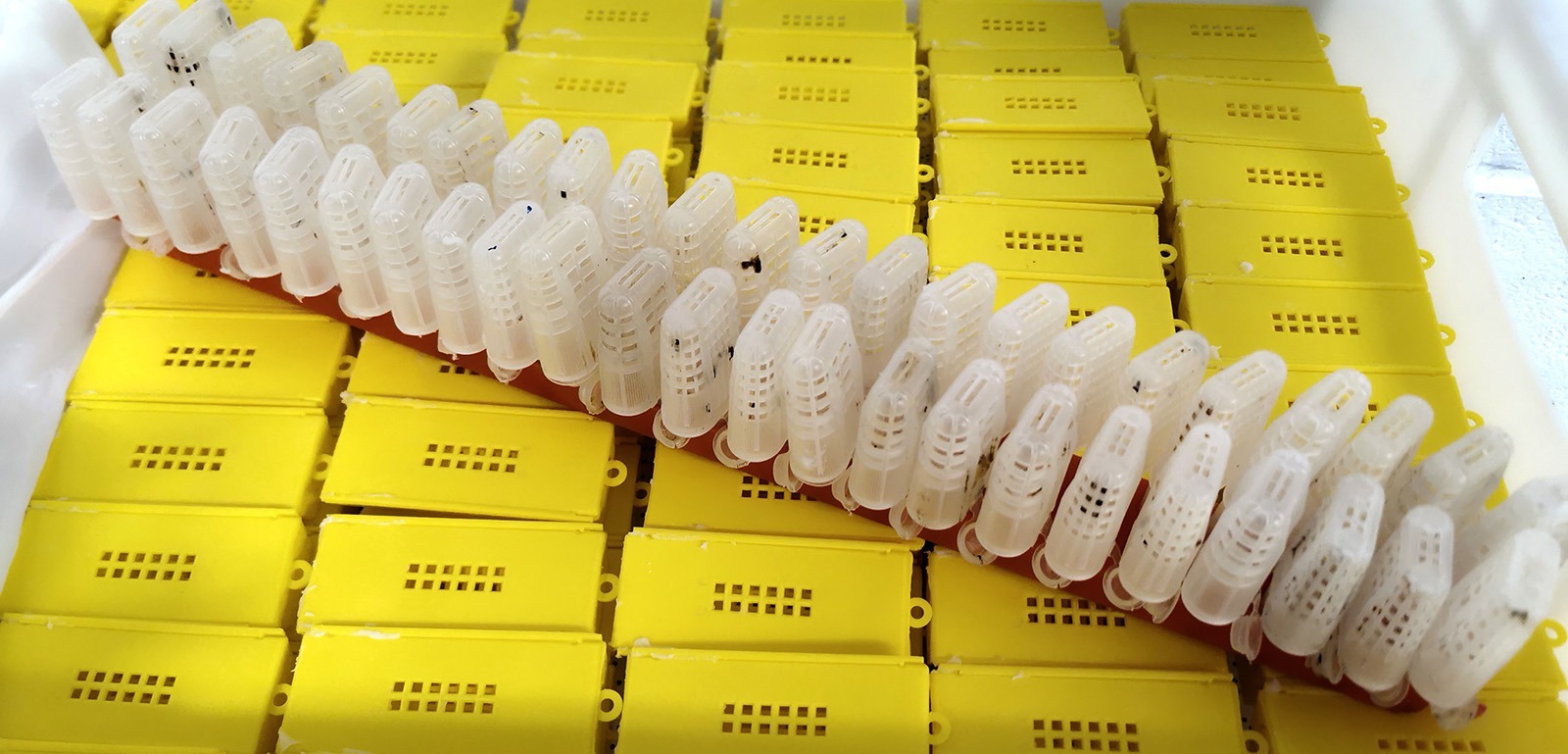
    On the eighth day after grafting, we remove the grafting frame, brush off the bees, and carefully carry the delicate cells to the incubator. We have a Carricel portable incubator for moving cells, which keeps them warm. Each cell goes into a roller cage, which goes into a layer of foam in the incubator tray, which has holes in it (so that the roller cages can stand up in the holes). The incubator temperature is 34.5 °C, and we put some water in a tray at the bottom to keep up the humidity (60%-80%).

    Cell Building: Back to Step One

    At this point, we can do it all again! Split the hive into a small queen-right one to the side, and a strong cell builder into which the next round of grafts can go. Another 24–30 larvae, to make 20–24 cells. This can be kept going for a bit, but after the second round you really need to add more sealed brood, and the top box is beginning to get some honey stored in it. I normally stop after the second round and just allow this giant colony to make an enormous honey crop. I set up another cell builder later on, once my new queens have got mated and moved to full-sized nucs or hives.

    Cell Building: Step Six – mating nucs

    Two days after going to the incubator, the cells get moved to the mating apiary, and placed in nucs with a cell protector (orange plastic ones made by JZBZ). The nucs are small queenless colonies which have bees, stores, and often brood. We break up our over-wintered mini-plus ‘towers’ into single boxes, each with bees, brood, and stores. We may also put a queen cell into a nuc made up from ‘spare’ brood and bees taken from strong colonies.

    I may sometimes even resort to using Kieler nucs, if I have more cells than I know what to do with. However, I would rather use the cells to re-queen any colonies that have made swarm cells or those with old queens (in their third season). If a colony is going to swarm, I remove the queen in a nuc, destroy all swarm cells, and add a cell from the incubator (it must be protected). Based on Cory Stevens’ experience, I could use that colony as a cell builder if required. We will collect the royal jelly from the destroyed swarm cells and freeze it for later use, maybe. That’s the plan, anyway.

    Newly emerged virgin queen bee
    Newly emerged virgin queen bee

    Oh, and sometimes stuff happens, and I get to the incubator later than planned, and I find emerging virgin queens. I quite like them, but introduction to established mating nucs can be a problem (a protected cell works; virgins can get killed). Virgins are probably best introduced to full-sized nucs or hives which have been rendered hopelessly queenless. The good thing about virgins is that you can examine them to ensure that they are large and healthy. Sometimes good-looking queen cells do not contain viable queens.

    Jay Smith (1871–1958)

    In his book ‘Better Queens’, Jay Smith described how he found a way to make the very best queen cells. After producing thousands of queens by grafting, he eventually came to the view that better cells could be made by cutting a row of eggs from a comb and sticking it to a top bar, which could be used instead of grafted larvae. I tried this once, and made a right pig’s ear of it, so I’m happy with grafting.

    Final Thoughts

    It might be argued that using one of those Jenter or CupKit systems should achieve a similar result, as queens could be made from eggs rather than young larvae. This might further be enhanced by trying to utilise the ‘maternal effect’ which David Evans has written about. To achieve that, you’d need to make artificial queen cups (larger than worker cells), and persuade the queen to lay into them.

    I know that you can make good queens using smaller cell builders than the gigantic one that I have described above. However, I know from my experience, and that of Brother Adam, Mike Palmer, Jay Smith et al., that the best cells come from a colony that is on the edge of swarming. If they are bursting with young bees, with plenty of good nutrition, they make better cells. They just do.

    David Kemp Raising Queens at Buckfast late 1960's
    Raising Queens at Buckfast late 1960’s (David Kemp)

    Of course, if you don’t want 50+ queens, and you don’t have many colonies, this won’t be for you. There are plenty of small-scale approaches, but this is the one that I have found to be the best. I also know people who use smaller cell builders, typically five frames over five in a double nuc, with great commercial success, and they know more about queen production than I do. So there are plenty of options!

    podcast link
  • Room For All Types Of Beekeeper

    Room For All Types Of Beekeeper

    Listen instead of read: https://share.descript.com/view/iXbI3vkK9PH

    I went and bought “Genetic Priorities for Conservation of Native Honey Bees” by Dorian Pritchard, one of the “big voices” in an area of beekeeping that is foreign to me. It seems well produced and has some interesting ideas, but I find the logic a little confused. But maybe it’s just me who’s confused! I wanted to try to understand why emotions run so high when the subject of black bees arises, and why commercial beekeepers and queen breeders are viewed by some as destructive and negative forces. In this article, I shall compare the type of breeding advocated (but not always followed) by Mr Pritchard – natural selection – with modern queen breeding, in which humans engineer certain traits into the bees.

    Confused Walrus

    However, the confusion I have needs to be explored first. There are two main arguments put forward about Apis mellifera mellifera (Amm), which many consider to be the native bees of Northern Europe. The whole idea of native anything is somewhat flawed, in my view, but that’s another matter. The first argument, and one I subscribe to, is that Amm is a subspecies with a unique history and set of traits, and it should be conserved. It should not be allowed to disappear. That’s the conservation argument, and who could disagree with it? I love black bees, and the other types too; it would be tragic to lose them.

    Protected Conservation Areas

    Given the importance of conservation, I would support protected areas being set up, backed by legislation, similar to what happened with Colonsay, in Scotland. I don’t believe there are any legally protected Amm sanctuaries in England. The one in Mount Edgecombe in Cornwall does not appear to have legally protected status, but I could be wrong. It’s also tiny. As far as I know, anyone could plonk a load of Buckfast bees down in that area without breaking the law. However, I believe that the beekeepers on that peninsula are of the same mind, and are keen to preserve the “Cornish black bee”. Without designated legally protected areas, at least in much of England, there will always be the typical mongrelisation going on, if that’s a word. Many beekeepers prefer different types of bee, and they have every right to keep them.

    Map of Devon showing bee types using colour
    Honey bees in Devon are hybrids according to DNA analysis (Beebytes)

    Going Back To Our Roots?

    The second, and much harder to agree with argument, is that Amm evolved over thousands of years to be the perfect honey bee for our country, so anything that is not Amm must be less good. From this, it is a small step to say that we should really only keep Amm bees, even though, in truth, a 100% “pure” Amm is about a common as hens’ teeth. Bees of different subspecies freely interbreed, and this has led to most bees in England being mongrels. It doesn’t make them bad bees, but they are a mixed bag.

    Many believe that we should try to get back to the black bee, by only allowing bees of the native type (no ginger colouration on the bodies of the bees) to propagate. That, of course, is not natural selection. But apparently, that type of human intervention is okay because it is an attempt to get back to what nature created in the past. Jurassic Park anyone? There is a clash between allowing nature to take its course and trying to recreate a land of “native” bees. When nature takes its course, in my area at least, you get mongrels. In Northumberland, the black bees do very well by many accounts, and natural selection seems to prefer them. Which is great. But we don’t all live in Northumberland.

    Willie Robson and his bees
    Willie Robson keeps black bees in Northumberland (thisisnorthumberland.co.uk)

    Humans Are Not Unnatural

    While I’m on the whole nature vs nurture subject, humans are part of nature too. We have had a profound (generally detrimental) impact on our planet, but we are part of nature. The imports of bees at various times have not all been negative. Mongrel queens head many great colonies. Beekeepers across the country were desperate for imported bees after the Isle of Wight disease because they had some resistance to whatever caused that particular plague.

    Anyway, I hope I have established that ensuring the ongoing survival of Amm is a good thing, which I support. I think that Sue Coby has provided a template that could be followed. Her methods incorporate instrumental insemination, to enable selective breeding of certain beekeeper-friendly traits into her closed population of carniolan bees. I don’t have a problem with that, but there is a school of thought that such interference can weaken the bees, whereas allowing nature to take its course leads to ideal diversity and adaptation.

    Domestication By Breeding

    Let’s look at some outcomes of human meddling with nature to bend it to our will.

    Cows

    The wild ancestors of our domesticated cows were the aurochs. They roamed across Europe, Asia, and Africa, and were hunted extensively by humans (and plenty of other things, I imagine). In the Near East they were domesticated about 8,000–10,000 years ago, as humans transitioned from hunter-gatherers to farmers.

    artists impression of an auroch
    An artists impression of an auroch (now extinct)

    Pigs

    A similar situation applied to pigs, who descend from wild boars. They occupied similar land masses and were domesticated at a similar time. At least wild boar still exist, whereas aurochs are gone.

    Sheep

    It’s the same story again for sheep, who descend from mouflon, which is still found in some parts of the Middle East and Asia.

    One thing that stands out about the difference between the wild and domesticated versions of the above livestock is the size of their horns. They are much smaller in most of the domesticated breeds.

    A cyprus mouflon
    Cyprus mouflon (wikipedia)

    Chickens

    The original “wild chickens” were the red jungle fowl, a native of Southeast Asia, which still exists today.

    The ancestors of these modern animals were gradually domesticated through selective breeding to produce traits beneficial for farming, such as tameness, higher productivity, and adaptability to human-controlled environments.

    Beagles

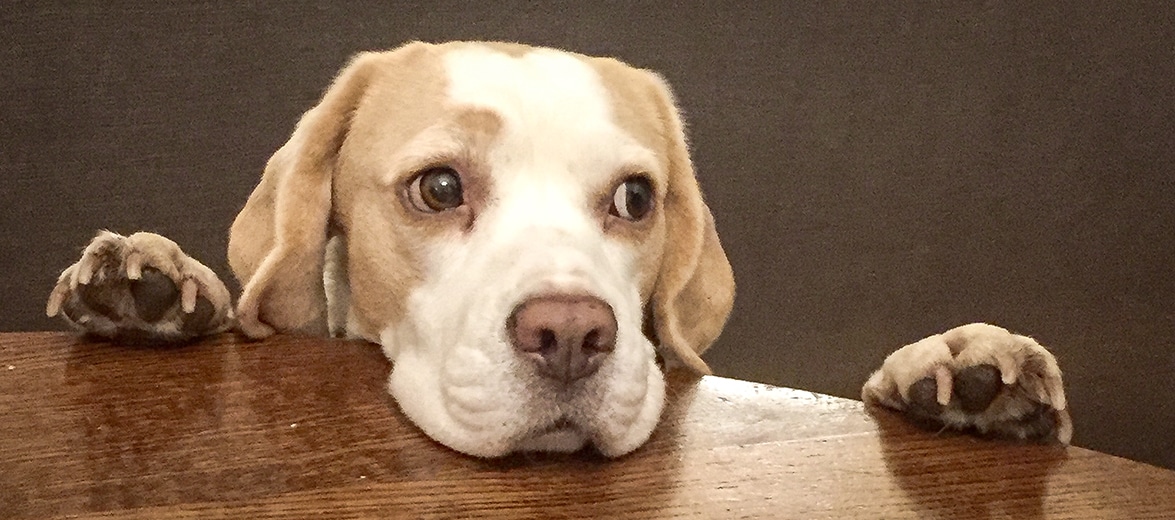
    I can’t exclude my favourite breed of dog, can I? Like all dogs, beagles descend from grey wolves, who were domesticated as far back as 20,000 – 40,000 years ago. Early domesticated dogs were selectively bred by humans for specific traits, such as hunting ability, size, and temperament, giving rise to various breeds. The Beagle’s lineage traces back to hunting dogs in Ancient Greece and Rome, where small, scent-oriented hounds were bred to track game. They are cheeky and cute, but also very useful for sniffing out drugs or explosives at airports.

    So, selective breeding; it’s what we do. For some reason, some people frown upon selective breeding of honey bees. Unless it’s to try to backtrack to a more pure example of Amm. Weird. What it boils down to is whether the selection is being done by “nature” (the environment) or humans.

    Commercial Beekeeping

    Modern commercial bee farming is a cornerstone of the global agricultural and ecological framework. At its core, it involves the large-scale management of honey bee colonies for honey production and pollination services. In parallel, the practice of selectively breeding honey bees has become the norm for improving traits such as docility, high honey yield, and disease resistance.

    Hives alongside field of borage
    Hives alongside field of borage

    However, an alternative approach exists: allowing natural selection to shape bee populations without direct human-driven breeding. With natural selection, environmental pressures dictate which bees survive and reproduce, potentially leading to more robust, genetically diverse colonies. I think that we will never be able to get away from bees doing what they do, and reproducing by swarming. We will always have natural selection going on, and across most of the UK there is a great intermingling of bee genetics taking place in a very natural way.

    Good Things About Bee Farming

    Commercial beekeeping is a significant contributor to Europe’s economy. Honey, beeswax, royal jelly, and propolis generate substantial revenue. Beyond these products, managed bees provide crucial pollination services. Crops such as almonds, apples, oilseed rape, mustard, and borage rely on honey bees for optimal pollination, supporting both local food production and export industries. This synergy between pollination and honey production provides livelihoods for beekeepers and growers. One might call it a “win-win”.

    Of course, pollination will happen without honey bees. There are lots of pollinators. For the growers, it is very convenient to be able to have large numbers of honey bees visit their crops exactly when needed, and be removed afterwards. Crop yields can be increased by 10%+ using the right number of honey bee colonies per hectare. That’s an increase above what local wild pollinators would achieve.

    Some Negatives

    Miticides: The Varroa mite stands out as a major threat to honey bee colonies. While miticides have proven effective in controlling these pests, they can cause unintended consequences. Chemical residues can accumulate in wax, creating potential sublethal stress for bees. Over-reliance on synthetic treatments like amitraz can also accelerate mite resistance, necessitating stronger or more frequent chemical interventions. Without rotation of treatments, using organic acids or essential oils, it is likely that the efficacy of amitraz will wane. Going treatment-free is not normally considered viable, as so many colonies would die in the first few years, and bee farmers would lose their livelihoods.

    Reduced diversity: Although selective breeding can produce bees well-suited for particular environments or markets, it may inadvertently narrow the genetic pool. A reduced gene pool can make colonies more vulnerable to emerging diseases, environmental changes, or other stressors. The focus on a few commercially favoured strains risks overshadowing the ecological and genetic contributions of local or wild bees, which may harbour valuable traits such as hardiness or unique foraging behaviours. This is why conservation is a good idea. However, the breeders are not idiots, and the degree of diversity across UK honey bees remains high. Although many queens are purchased each year by beekeepers, the majority of colonies are headed by diverse home-made queens.

    Competition with wild pollinators: High-density apiaries can create intense competition for floral resources, particularly if placed in sensitive or already resource-limited habitats. Native pollinator species may be overshadowed, potentially leading to shifts in local plant-pollinator relationships. Furthermore, large-scale commercial movement of bee colonies (migratory beekeeping) may spread pathogens to other honey bees or even other species such as bumbles.

    Supportive Legislation

    Many European countries have recognised the importance of apiculture and have introduced policies to support beekeepers. These might include subsidies for equipment, training programs in disease management, and research funding for selective breeding initiatives. The European Union’s regulatory framework on pesticides, for example, is partly shaped by concerns over pollinator health. Many pollinators have suffered from population decline, but the honey bee isn’t one of them, despite frequent reports to the contrary.

    Goals and Methods of Selective Breeding

    Selective breeding in apiculture focuses on honing desirable traits. Just like creating the perfect dog – the beagle! Key objectives often include:

    • High honey production
    • Gentle bees
    • Low swarming propensity
    • Disease/parasite resistance e.g. hygienic bees, and bees with some degree of varroa resistance (ability to reduce the mite’s rate of reproduction)
    Queen cells
    Queen production in Denmark

    Breeding programs typically involve controlled mating by isolating queen bees and introducing them to selected drones. In Europe, very sophisticated breeding programmes have been running for many years, often utilising island or peninsula locations in Denmark and Germany for mating. Brother Adam achieved isolated mating at Sherberton on Dartmoor. Artificial insemination is also employed in some research and commercial settings, ensuring that queens receive genetic material from pre-chosen drone lines. It’s precisely what we have done with agricultural livestock and crops, and what many people benefit from in their flower gardens.

    Natural Selection

    In contrast to human-led breeding programs, natural selection in wild or feral bee populations works by “testing” each colony in its local environmental conditions. The survival and reproduction of colonies depend on their inherent adaptability to threats – disease, climate, predators, and more. Colonies that survive pass on genes that have proven robust under these pressures, gradually enhancing population-level resilience. Over many generations, this process may lead to populations with greater genetic diversity and resilience. However, it also involves more significant short-term risks, as colonies unsuited to local conditions simply perish.

    Mike Palmer, who has very long and cold winters in his apiaries in North Eastern USA, believes his winters are great at weeding out weak or unsuitable genetics. Dorian Pritchard believes the same, and advocates no hive insulation so that the bees are forced into a tight cluster with a brood free period. I can see their point, although personally, I insulate the tops of my wooden hives to prevent condensation from forming and dripping onto the cluster. To be honest, winter in my area is quite mild, so it’s not putting much selective pressure on my bees.

    Advantages of Natural Selection

    Greater genetic diversity: Feral colonies adapt to local conditions in a myriad of ways, often leading to a broad genetic base. However, in the case of varroa mites, allowing most colonies to die by not treating them will mean a genetic bottleneck, as only maybe 5% survive. In hundreds of years that may not matter, but in the short term it’s devastating.

    Resilience and disease resistance: Without chemical or human intervention, only colonies with strong natural defences survive, helping to propagate those resilient traits.

    Ecological balance: Natural selection-driven bees may be better attuned to local flowering cycles, potentially enhancing pollination efficiency in native ecosystems.

    Downsides To Natural Selection

    Reduced honey yields: Bees that prioritise survival traits may not always be top honey producers. They may, in fact, be highly prone to regular swarming, and small colonies, meaning small amounts of excess honey for the beekeeper.

    Unpredictable temperament: Bees selected by nature rather than by breeders for docility can be more defensive. Black bee evangelists claim that defensive behaviour comes by crossing with evil foreign bees. I am pretty sure that bees left to their devices become more defensive than bees specifically bred for docility.

    Short-Term Colony Losses: Widespread mortality may occur initially, especially when new pathogens or pests strike because no chemical interventions are employed to cushion the blow. The species (or subspecies) may survive, but there will be peaks and troughs in populations as challenges strike. Boom and bust is not uncommon in the natural world.

    Conclusion

    Modern commercial bee farming offers tangible economic and agricultural benefits. By harnessing selective breeding, beekeepers produce colonies that are high-yielding, docile, with low losses, meeting the demands of a growing agricultural sector while ensuring a steady supply of hive products. There are a lot of humans to feed, and food producers need all the help they can get. This approach can also reduce genetic diversity and exacerbate dependencies on chemical interventions. It’s about striking the right balance.

    Allowing natural selection to guide bee populations may foster robust, genetically diverse colonies that are inherently better adapted to local environmental conditions. While this strategy can sacrifice short-term productivity and predictability, it offers potential long-term gains in resilience and ecological harmony. But will it satisfy the humans that want plentiful and varied foods at low prices?

    A balanced perspective seems to be that selective breeding and natural selection need not be mutually exclusive. Many apiculture experts advocate “soft” breeding approaches, where bees are selectively bred but with room for local adaptation and minimal chemical inputs.

    I think there is room in the UK for all types of bees and beekeepers. Given the degree of genetic mixing that has already taken place, the only hope for the conservation of pure examples of the various subspecies is through the creation of protected areas, where other bees are excluded. Creation of such places would be a positive thing, whereas infighting between beekeepers is negative and futile.

  • Imported Queens

    Imported Queens

    A review of Healthy Bees, Heavy Hives that recently appeared in BeeCraft magazine got me thinking. It was generally a positive review, but towards the end there was some criticism for missing something out. In fact, it stated: “I believe the absence of a balanced argument on the subject of queen imports is a significant omission”. I’m sure there are plenty of other things that we missed out, given that there are only just over 200 pages of content, including many photographs and illustrations.

    Our Little Book

    Given that potential readers of our book may be influenced by published book reviews, I was disappointed that the BeeCaft review failed to mention that the book goes into some detail on raising queens of your own. We cover the importance of queens, traits, selection of breeders, the process of producing queens at varying scales, and mating. There are some really excellent (in my opinion) diagrams that help to explain the process of raising queens. Most of my queens in my apiaries were grafted by my own fair hand (flipper, actually). I think that particular review might leave readers with the impression that all we talk about is buying queens in from abroad, which is not the case.

    Don’t get me wrong, I bet if I reviewed a book, I would mess it up far more spectacularly than the review I’m referring to. Both Paul Horton and I are extremely grateful to BeeCraft (and reviewer Geoff Blay) for even thinking of our little book. I am using the review as a way to introduce the controversial topic of queen imports, rather than to complain about it.

    Bias

    I freely admit that I have my biases. For example, I find it very difficult to hear about ‘treatment free’ beekeeping, knowing what I know about the damage wreaked on honey bees by varroa mites and associated viruses. Beekeepers do seem to have strident views on numerous topics, and I reckon the importation of queens must be right up there towards the top of the list. I have been trying to understand exactly what causes such intense opposition to the importation of honey bee queens.

    Virgin honey bee queen
    A newly emerged virgin queen

    Opposition To Imports

    The British Beekeepers’ Association (BBKA) has many members (25,000 is my guess), and is the vehicle through which most UK beekeepers receive information, advice, and education on the subject of beekeeping. The BBKA opposes the importation of queens. Presumably, many of the beekeepers in the UK do too. As it happens, the BBKA News has just arrived at my house, and it contains an excellent article on sourcing queens by Lynfa Davies. It’s mostly aimed at beginners, and rightly encourages learning about making your own queens. I’m fully onboard with that. There are some valid concerns about imports, which I will discuss in due course.

    Firstly, though, the concept of imports and exports (aka international trade) has been going on for millennia, to the benefit of the majority of people. Try imagining what your life would look like without computers, mobile phones, TV sets, motor vehicles, clothing, food, etc. that comes from some far-off place. How many cars on our roads are from Germany, France or the Far East? I must conclude that it is not imports per se that people object to, but imports of this particular item (queen bees). The import of queens is not new, of course. It’s been going on for as long as we have had beekeepers and the ability to travel.

    Why Does It Happen?

    As I understand it, the reason for such vast quantities of imports (of anything) are that:

    • they are unavailable locally and/or
    • the imports are better than local stuff and/or
    • the imports are cheaper

    When it comes to farming, I find it sad that most supermarkets seem to prioritise ‘cheapness’ over quality, which means that UK food producers often have a tough time. This is why I like farmers’ markets; local food which is great quality, albeit a wee bit pricier than something in a packet from a supermarket. At least the honey at farmers’ markets is actually honey.

    Reasons To Be Wary

    There are some sound reasons for being wary of imported livestock, including queen bees. The big one is the risk of importing exotic pests and diseases. Or any pests and diseases, for that matter. Varroa mites got here on imports. We don’t want them, but that ship has sailed, and we don’t want small hive beetles or tropilaelaps either. Asian hornets are here now, but they came in with our other imports (not our imported queens). If everyone obeyed the law, these risks would be largely mitigated, but, in the real world, some don’t.

    I have often seen it cited that Chronic Bee Paralysis Virus (CBPV) is higher in apiaries with imported queens, which it is. This does not necessarily mean that the imports brought CBPV with them; they may just be more susceptible to the disease that is already here. However, given all the nasty things that can arrive with imports, I am in agreement with either buying locally or being extremely careful with ensuring that imports pass stringent safety checks.

    Local Adaptation

    Another tick in the ‘don’t import queens’ box concerns local adaptation. The honey bee is a remarkably resilient and adaptable insect. Research has indeed shown that local bees tend to do slightly better than bees from far away, which is not exactly unexpected. However, bear in mind that here in the UK we have an enormous range of different local conditions. Different weather, different plants, different accents (!). Is a bee from Essex going to do as well as the local bees in, say, Carlisle. I doubt it. It’s not quite the same as an import from Southern Europe, but it is effectively a ‘foreign bee’. However, perhaps a Danish bee would do better in Carlisle than an Essex bee. Perhaps a Belgian bee, from just over the Channel, would do better in Essex than one from Carlisle.

    In places with more extreme conditions (West coasts of Ireland & Scotland, parts of Wales, Northumberland etc.) the ‘local adaptation’ factor is stronger because the environment is harsher. In those areas, we often find that Apis mellifera mellifera type bees do best, and those are the places where you are most likely to find very pure examples of that subspecies. Horses for courses.

    The same logic that says, “Don’t import bees from Europe because they are not adapted to our unique conditions,” should also apply to the Essex bee travelling up to Carlisle. Speaking for myself, I don’t think my conditions are anything special; all very non-extreme. In twelve years I have had bees from Somerset (Peter Little), Perthshire (Jolanta), Northumberland (Luke Hutchinson) and the Home Counties (Ged Marshall) — they were all fine. My favourite queens are the ones grafted by me, and mated in my little corner of Cheshire.

    Alex_Donohoe_with_queen_cells
    The mole inspects some queen cells

    Pesky Foreigners

    The real reason beekeepers seem to get so hot under the collar about imported queens is that they have been told, over and over again, that when those nasty foreign bees mix their genes up with our lovely locals, the result is a hybrid that stings for fun. That’s the bit I struggle with. My locals ain’t lovely; they are okay. Some are great, some not (just like the imports). My locals are ‘mongrels’ — a genetic mixture of all sorts, with probably about 50% Apis mellifera mellifera included. When you mix hybrids up with other hybrids, you get hybrids. Some will be great, some will be horrific, and many somewhere in between.

    The propensity to ‘defensive behaviour’ in bees is determined by numerous factors, of which one part is genetics. There is not one ‘on/off switch’ for defensiveness; it appears to be associated with many genes, but also environmental factors too. I think it is misleading to claim that when a local hybrid is crossed with local drones (hybrid), they will produce more gentle bees than with drones from a ‘foreign’ hybrid. Especially if those ‘foreign’ drones come from years of careful selective breeding for the trait of gentleness.

    Not Just Genetics

    Take a gentle colony and stick it in a different location, and the temperament could change, even with the same bees. In fact, a gentle colony can become horrible when the honey flow stops, or when the queen starts to fail. It is too simplistic to ‘blame the foreigners’ in my opinion. It’s also ridiculous to be completely fine with moving bees within the UK but totally opposed to moving them in from a neighbouring (sometimes nearer) country, at least on the grounds of making bees more defensive.

    The Scale Of The Issue

    The number of queens imported to the UK gradually rose over the years to about 20,000 per year, but has fallen back to 10,105 (2023). https://www.nationalbeeunit.com/diseases-and-pests/reports-charts-and-maps/imports-and-exotics/live-third-country-import-report/?year=2023

    The imports are not a big slice of the total number of queens in the UK. Who buys them? I reckon a lot probably go to commercial beekeepers, but presumably some curious amateurs get involved too. Some commercial beekeepers run 200–300 hives with no employees, or maybe one, and they are flat-out dealing with honey production. They can buy excellent queens who do an outstanding job for perhaps £30–£40 apiece, or they can make their own. You can see how, if you want 100 queens a year, then buying them in for £3,000 makes sense. The costs of setting up and running a queen rearing unit would be higher, although once it got going, some costs could be clawed back from nuc sales. As the commercial bee farm gets larger (500+ colonies), so the logic for a queen unit becomes greater.

    If you have to hire staff to do it, the costs really ramp up. But if you do it yourself, the huge amount of extra time demanded from running a queen unit will eat into time allocated for checking production colonies, swarm control etc. Personally, speaking as one who does not make his living from honey sales, I raise queens because I love doing it. Moreover, now that I have made the investment in equipment, the actual cost of my homemade queens is probably not too high. I do buy in the odd instrumentally inseminated breeder queen, though, and they are not cheap. This year’s breeder queen, assuming she survives winter, came from Northumberland Honey. Last year’s was one from Andrew Little. I also graft off my own queens when I find a nice one.

    I wonder how many queens are purchased by UK beekeepers each year. I reckon at least 30,000 of them. According to the National Bee Unit (NBU), there are about 300,000 colonies here, but that ignores those ‘under the radar’. Even if only 10% of those get re-queened with a purchased queen, we get to 30,000. Can UK queen producers satisfy demand for 30,000+ queens per year, every year, in times of good weather and bad? I don’t think so. That’s why imports happen.

    Map of honey bee lineages
    Lineage map (source: Recent advances in population and quantitative genomics of honey bees Kathleen A Dogantzis and Amro Zayed)

    Fantastic UK Queen Producers

    Incidentally, there are some fantastic queen producers here in the UK. Just not enough of them. It does amuse me that many of the people seeking a ‘UK queen’ are actually buying daughters of an imported breeder queen. It is very common for queen producers to buy the best breeder queens they can find, often from all over Europe, and then mate their daughters here at home. The resulting bee is a UK-bred queen. But her genetics are not entirely British. Frequently, they are not very British at all, depending on the drones that mated with her. If you populate a mating area with drone-donor colonies, where the drone mother is an imported breeder, and you use virgin daughters from an imported breeder (different line), you end up with decidedly non-UK bees. But they are ‘UK bred,’ so that’s OK. They are also superb bees, in the main.

    Trying To Be Balanced

    In summary, I much prefer to make my own queens rather than buy them, sometimes I do buy them, and every year I buy an instrumentally inseminated breeder queen (from a UK queen breeder). I entirely understand that not everybody wants to make queens, and that they therefore must buy them. Given the balance of cost, quality and availability, it seems inevitable that imports of queens from Europe take place to some extent. I am concerned about the pest/disease angle regarding imports, but less convinced by the ‘local adaptation’ and ‘defensive bee’ arguments, for my area, at least.

    Update

    I have had feedback from ‘one who knows’ that the main buyers of imported queens are ‘traders’. These are a subset of commercial beekeepers who buy in queens, then sell on both queens and nucs to customers. Once the imported queen has been added to a nuc, the nuc is a ‘UK nuc’. Some people do this exclusively, some do a mixture of this (especially early season) and raising their own queens. Some people concentrate entirely on raising their own, so they are not traders, but queen producers (or queen breeders if they use isolated mating or instrumental insemination). The ‘traders’ will mostly be selling to the smaller beekeepers, because the big operations will import directly rather than go through a ‘middle man/woman’.

  • Murray Knows About Honey

    Murray Knows About Honey

    When I interviewed Murray at his home in Perthshire in 2017, I asked him about honey production. Firstly I wanted to know how much honey he makes. (That’s with an ‘h’ not an ‘m’!)

    Average Crop per Hive

    Murray: Our long-term average? We don’t really count the blossom much, but we should be looking at about 10kg for blossom honey. It used to be more like 15kg, but clover is more or less an extinct plant around here now. We used to get 15kg to 20kg with the clover and when the raspberries were on, but neither are here now. Blossom honey averages have declined to about 10kg per hive. 

    Heather is our main crop. Our long-term average is about 20kg, 42lbs – 44lbs per hive per year, going back 30 to 40 years. The changes in methodology in recent times means that our average is rising slightly now.

    Steve: Is there any particular thing that you think is responsible for that?

    Murray: We’ve done a fair bit of changing of bee stock. We have a breeding program in place using selected stock that’s done well. Also, we now try to split everything early and re-unite the splits to the parent hive at the heather, which gives you an extra chance of a crop.

    Springtime

    In the springtime, we have already collated all the information from the farmers about what crops are growing where and where the bees are going to go. We set about dispersing the bees from their wintering sites to a relatively large number of spring sites, which can be 170 to 180 places. They are set up in far smaller groups to avoid overloading the forage in each place. While the oilseed rape is in flower, there is abundant forage. As soon as it tails “off, if you have too many hives in one place, the bees go into decline.

    Steve: Right

    Murray: So, we move them out from their winter sites to the oilseed rape. If we have an extra crop to go to, like spring-sown oilseed rape, or raspberries or perhaps some phacelia or borage, we will move them onto a second crop because happy bees are working bees. As long as they have something coming in, the colonies do well; they stay healthier and have better morale and develop better for the heather. If there is no second crop to move to, they stay where they are. We hope they get a bit of clover, something from the trees, maybe Himalayan balsam if it comes along in an early flowering area.

    The Main Event

    Then from sometime around 5th July, we start the heather moving. We collect all of the bees from all of the summer sites.

    Hives placed near heather
    Hives in heather near Newtonmore

    Steve: Some in England and some in Scotland?

    Murray: Yes, we have a unit of bees in England centred on the old Cooperative Farms at Hereford and Cirencester. They tend to overwinter down there and go to spring crops there, but all hives go to the heather. We have four distinct heather areas: Aberdeenshire, which is basically around the valley of the River Dee, West Perthshire, the A9 between Dalwhinnie and Aviemore, and then we also have recently acquired some territory in the Angus Glens, in particular Glen Esk.

    They go to the heather to get the heather honey crop, which is the economically crucial one. They are moved there throughout the month of July. At that point, we no longer examine the bees. It’s just a boxes-on operation. Add boxes as required, re-unite splits, and then wait until the end of the first week of September, when we commence the harvest.

    The Cycle

    Then the whole cycle repeats again. You harvest the heather honey from the bees on the mountains, and then they go on the lorry, and you bring them home to their winter place, feed them, and that leads into the next spring.

    I asked Murray about how he selects breeder queens, as this seems to be a factor in maximising the honey crop when there is one.

    Virgin honey bee queen
    A newly emerged virgin queen

    Breeder Queens

    Murray: A lot of bee breeders have a formal scoring system. They rank certain important properties and give each a score so that anything scoring below a certain level is never allowed into the breeding process. Our needs are much more basic. We need a honey-producing colony, and we need the bees to be workable and healthy. One of the properties we look out for is the brood pattern and fecundity of the queen. You’re looking for a solid brood pattern and bees that are steady on the comb and don’t run too much, so they are easier to manage, meaning you can run more colonies.

    You’re looking at the honey production, and there are other things like we won’t allow a colony with more than a few cells of chalkbrood into the process. Ultimately, we would hope to get chalkbrood out entirely. We are also trying to choose bees from types that are resistant to EFB because, despite the fact that we are dealing with EFB, and it’s not an overwhelming problem for us, it’s still there and is definitely linked to bee type. It’s not that one bee is immune and one isn’t, but the degree of susceptibility varies, so we look to breed from stock that has shown itself to be less so. 

    We buy in breeder queens from other people, and we select the best from our own. We keep the good ones from the year before, and from the field where we have 3,000+ hives, we only need to choose 5 or 6 to go into the breeding program. I can afford to be extremely choosy. “Good enough” is not going to get in; it’s got to be something exceptional to get accepted and brought in. They can be rejected on the flimsiest of things, like a couple of bees jumped off and stung me. It’s not an aggressive hive, but you know, you’re going to find one where that doesn’t happen.

    Making Money from Honey

    I wondered if there was any other bee farmer that Murray admired.

    Murray: There are a number of people who I admire in some of the things they do, but not other things they do. I have actually stolen some peoples’ ideas. It would probably surprise this guy to know, but there’s a guy in Yorkshire called John Whent. He is quite a large commercial bee farmer. John is the man who has truly demonstrated the concept of making money from bees without packing your honey in jars and flogging your tail around. He did it in bulk. The model I went on to in the later years, the last 12–15 years, (the bulk only model) was essentially inspired by him. I realised that he was the one guy who had really made a lot of money from bees. He was the one guy that didn’t pack any jars.

    Steve: Right, that’s interesting.

    Murray: He maintained his total focus on the bees, their welfare, and production and didn’t get himself side-tracked with customers and packing and things which in some cases are vanity projects.

  • Better Bees

    Better Bees

    Humans (and walruses) are part of the natural world. We are animals. Sometimes we like to set ourselves aside from nature as if we are not part of it, but this is wrong. However, there is no denying the powerful and often damaging impact that homo sapiens have made upon our planet and its inhabitants. Agent Smith in The Matrix convincingly described humans as a virus.

    The Rise of Farming

    Thousands of years ago, many humans changed from being hunter-gatherers to farmers. This enabled populations to grow and new diseases to flourish. We “domesticated” animals because they had value, such as producing milk, eggs, wool, leather, meat, wax and honey. Yes, the honeybee has been farmed by people for a very long time. Beekeepers are farmers of bees. Whether it’s on a large scale selling honey in bulk to wholesalers or hobbyists with a couple of hives, we are intervening in the lives of another species. 

    One consequence of farming has been the modification of animals through selective breeding programs. No doctorate in genetic science was required. Farmers bred from their best stock, and over the years the nature of that stock changed. Actually, the same happened with agricultural crops and flowers for the garden. The yields of plants such as rice and wheat have been boosted by cultivation and breeding. This has been necessary because of the enormous population growth of humanity. Genetic modification has been a recent phenomenon.

    Selective Breeding

    My point is that farming and selective breeding have been going on for millennia. Breeding better bees is trickier than improving cattle because honeybee queens mate on the wing with multiple drones from multiple colonies. You, the beekeeper, can control which queens you choose to breed from. Even if you have no control of the drones, over time selectively raising daughter queens from your best stock will push the nature of your bees in a particular direction. 

    What is a better bee? It depends on what you want. Some traits are inherited and can, therefore, be magnified or reduced through selection. Personally, I’m not a fan of bees that run all over the combs and drip off at the corners. Nor do I like bees that attack me at every opportunity and follow me around, waiting for the chance to strike. Also, being of slothful disposition, I prefer my bees to stay in their hive rather than swarm off to pastures new. Swarm control can be hard work and the bees that don’t swarm produce more honey in my experience.

    Richard Noel with a few queen cells

    Swarmy Bees

    There was an interesting exchange on the Bee-L forum about “swarmy bees.” Peter Armitage wrote:

    The matter of so-called “swarmy” bees came up in conversation with one of my beek buddies the other day when I mentioned to him that one of our pioneer nuc suppliers/breeders had imported eggs from Ontario to deal with increased swarming in her stock. Her stock had been built by her father, who had made too many nucs with swarm cells for too many years, she said. Remember that we’ve had importation restrictions here on the Island of Newfoundland since 1985 and therefore no free movement of genetics here for 35 years.

    My buddy said, “I don’t like that term ‘swarmy’. It’s their natural reproductive method. Talking about ‘swarmy bees’ is like talking about ‘hoppy rabbits’.”

    And yet, in popular musings among beekeepers, you will often hear admonitions and cautions related to building stock from swarms or swarm cells. Our beekeeping literature points to excessive swarming as a heritable trait that can be bred out of the stock.

    Making Increase

    Hobby beekeepers often don’t want to get too deep into raising queens using cell builders and grafting. This is fair enough. They wait until a colony makes swarm cells, then they use those cells to produce more colonies. One swarm cell goes into a nuc, along with frames of bees, brood and stores. A month later the queen is mated and the nuc can be made ready for the winter to come.

    Wild honeybees will swarm frequently, but many of those swarms will die. A balance must be struck for the species to survive. Colonies that swarm too much become weak and cannot make it through winter, and if their swarms are weak and die also, then that’s the end of those bees. We manage our domesticated honeybees in order to minimise loss of swarms. We use artificial swarm techniques to make new colonies from swarm cells so that they don’t fly off. Beekeepers are inadvertently exaggerating the swarming tendency but not allowing the swarms to fly off and potentially die. This is not good, in my opinion. 

    My Solution

    My solution is to raise queens by grafting the larvae from hives that have not shown a willingness to make queen cells. Some bees, if given space at the right time, will not entertain the idea of swarming. They build big colonies and make lots of honey. Other bees don’t seem to care about the space; they are going to swarm anyway. If I just made new colonies from swarm cells, I’m pushing my bees in the opposite direction to the way I want them to go. At this time of the year, I change the queens in my hives that swarmed. The new queen is one that I made from stock that I like. If I don’t do this, next spring they’ll be producing swarm cells and on and on it goes.

    No Science Degree Required

    Dr Richard Cryberg wrote about how little we really know in terms of the parts of the DNA responsible for specific traits. That has not stopped selective breeding being a success:

    Behavioural stuff is always at least in part genetic in every critter. My Dad had a registered Holstein dairy cow named King, who had a dominant aggression gene. Most dairy cattle are nearly pets; they are so docile. King was not a pet. She was sneaky mean. About half of her daughters had this same behaviour. One granddaughter also had this behaviour, and at that point, Dad sold every cow he owned with King’s blood. We never had another cow like her at all. It had to be genetic.  

    Homing Pigeons, Bees, Whatever

    Pigeons have been selected for homing or to not home. A decent racing homer will come home from 500 miles the same day of release. A roller will not come home from one mile away way over 90% of the time. Clearly, homing is genetic, yet we do not know of a single gene in pigeons that results in homing or lack of homing.

    There is the same anecdotal evidence that swarming in bees is inherited.  If you select for non-swarming, you can get far less swarming. If you propagate from swarm cells long enough, you will get bees you can not keep out of the trees. I have had such bees and know the history of them going back 40 years. For that whole time, they were propagated by catching the owners own swarms and mainly by starting new colonies from swarm cells. Randy Oliver has commented he found low swarming fairly easy to select in his own bees.

    Honey Production

    We know of other things in bees that must be genetic, based on the same type of information. Clear back in the early 1930s the U of Minn did experiments on breeding for honey production.  They documented an average colony honey production improvement that was remarkable over a few years simply by killing queens from poor producers and replacing them with queens raised from good producers. This work was done with a rather small number of colonies — only about 35 or 40 as I recall. No new blood was brought in during the experiment, other than perhaps wandering drones. This work was reported in Bee Culture back in the 1940s and in “The ABC” book at least until the early 1970s. Yet, we still do not know of one single gene that is involved in better honey production.

    If you want better bees, however you define “better,” you need to get selective, or buy queens from a beekeeper who is.