Tag: Farrar

  • Two Colonies In One: A Proven Way To Increase Honey Production

    Two Colonies In One: A Proven Way To Increase Honey Production

    There are many ways to skin a cat, apparently, and the same is true of beekeeping (many ways to do it). I don’t understand why anyone would want to skin a cat. It seems harsh, even if cats aren’t your thing. Bees don’t even have skin, so they are way ahead of felines in the ‘avoidance of knife-wielding maniacs’ stakes. For those beekeepers who like the idea of making more honey per hive than they currently do, read on. Two colonies in one: a proven way to increase honey production.

    Covering Your Costs

    My latest book on beekeeping (not yet in print), written with Paul Horton, who makes more honey than I can dream of, is about maximising your honey crop. Not everybody cares about such things, which is fine. However, what tends to happen to those of us who grow our hive numbers is that we wake up one morning and suddenly realise how much our beekeeping is costing us. Feeding syrup and treating for varroa mites is no big deal for a couple of hives. However, with ten hives, those things could easily cost over £250. The time comes when we wish to make some return on our investment, if only to stop us slipping into bankruptcy.

    An effective way to make the economics of beekeeping work in our favour is to increase the honey crop per hive. The costs per hive are more or less fixed, but honey yields vary tremendously from beekeeper to beekeeper. Why not be somebody who makes 80lbs or more per production colony? We will cover our costs and maybe even achieve a small profit. Typically, most hobby beekeepers get about 25lbs of honey per colony on average, then they give most of it away or sell it for less than it’s worth. That can’t continue when you get up to ten, twenty or fifty-plus hives.

    Don’t get me wrong; it’s not all about money. What’s more, some of the biggest factors that determine our honey harvest are things beyond our control, such as the weather. There are, however, things that we can do to make more honey per hive. One very effective way is to practise migratory beekeeping, like Paul; he continually moves bees from crop to crop, and honey flow to honey flow. That approach does not suit most people, who prefer to keep their hives in the same place throughout the year. An old way to increase yields for such people involves making giant two-queen colonies.

    Big Colonies Make More Honey

    Why does one big colony of 60,000 bees make more honey than two smaller colonies of 30,000 bees each? I don’t suppose it matters really, it’s just how it is. I tried to explore this in a recent presentation:

    With a two-queen approach, it’s possible to get truly giant populations in the same hive, maybe 90,000 bees. This is not for the faint hearted; giant towers of heavy boxes call for serious management. I have been reading a paper written by the great CL Farrar from 1958, called ‘Two-Queen Colony Management For Production Of Honey,’ which is very intriguing, as is most of what I’ve read by him.

    Farrar’s Writing On Two-Queen Colonies

    Excerpt of paper by Farrar on two-queen system
    Excerpt of paper by Farrar on two-queen system

    Farrar states that strong colonies that are divided 5 to 7 weeks before the main flow, then organised as two-queen colonies, can make twice as much honey for the beekeeper than if the hive had continued as a strong single-queen colony. He says that a yield of 500lbs is not uncommon. That’s a lot! What’s more, they collect more pollen, which is an advantage going into winter. Once the main flow is coming to an end, the queen excluder separating the two queens is removed, and the bees decide which one will take them into winter.

    CL Farrar two-queen colony method diagram
    Diagram from Farrar’s paper on two-queen colonies

    I’m going to try this on a couple of hives to see what happens. Farrar’s plan goes something like this:

    • For double brood colonies, reverse the boxes in spring so that the brood is in the bottom box with empty drawn comb in the upper box, above an excluder. For singles, add a couple of supers of drawn comb above an excluder to achieve the same thing.
    • Another brood box is added above a double screened board which has an entrance (Horsley or Snelgrove type board). The upper box gets at least three frames of sealed brood and 60% of the bees. It also gets the second queen, which should be a mated laying queen. He says that using queen cells creates a delay in brood rearing upstairs, which is counter-productive.
    • Both upper and lower brood nests should have frames of stores
    • The boxes above the lower brood nest must not be allowed to become more than half-full of honey. This means lots of lifting, moving out boxes containing honey (to go above the upper brood nest until capped) and replacing with empty combs.
    • As the main flow starts, the board separating the two colonies is removed, although an upper entrance is still needed for drones, which could be a hole drilled in the upper brood box. The supers above the bottom box must continually be cycled so that they are not over half full of honey. More supers are added at the top of the hive, as this is where most honey will be stored. Weekly visits are needed to remove and extract capped supers and add back empties.
    • Farrar says that 4 weeks before the end of the flow the colony should be reunited by putting all the brood boxes together at the bottom of the hive, then an excluder, then supers above. I don’t know how long his flows were, but it seems to me that a flow of 4 weeks is pretty good, let alone longer. I think I’d change it to ‘halfway through the flow’ which is obviously always going to be a guess.

    My thoughts on this, apart from “OMG I need to get fit before trying this”, is that the stage where the large colony is split vertically could be used to make a new queen, if a frame with some eggs on was put in the top box. I understand that the delay caused by not having the ‘upper queen’ mated and laying straight away is a problem, but frames of sealed brood could be used to boost it. In my case, I’d probably have queen cells available from my queen rearing and could use them, but it’s still 2 to 3 weeks before the new queen is laying (assuming good weather). Maybe the way to go is to initially put more of the brood from downstairs into the upper box at the time of splitting (Farrar’s 3 frames of sealed brood assumes a laying queen).

    Enter Floyd Moeller – Simplification

    Diagram of two-queen system by Moeller
    Diagram of two-queen system by Moeller

    Secondly, and this makes things much easier, Floyd Moeller’s research on two-queen colonies in the 1970s showed that you don’t need the supers above the bottom brood box. What a relief. As long as the upper and lower queens are separated by an excluder, then supers just need to go on the top. You do, of course, still require an upper entrance for drones. When adding supers, it’s going to be at least two at a time, possibly more. Weekly visits to remove capped boxes and replace with empties are still needed, unless you want a hive as tall as a house. I found out about Moeller here:

    https://actbeekeepers.asn.au/bee-buzz-box-november-2020-the-history-of-two-queen-hives-part-iv-the-two-queen-consolidated-brood-nest-hive/

    I’m sure there are tweaks and variations, but the basic idea of creating a giant population of forager bees in time for the main honey flow is sound. The only potential issue I can see is the Great British Weather. Occasionally, the summer flow is a flop. In fact, sometimes we don’t really get a summer, although recent years have tended to be warm, or even hot. That’s in my area on the Cheshire plain; it may not be getting milder where you are. And even if it is, nature has a way of surprising us with something unexpected from time to time.
  • In Praise Of The Great C.L. Farrar

    In Praise Of The Great C.L. Farrar

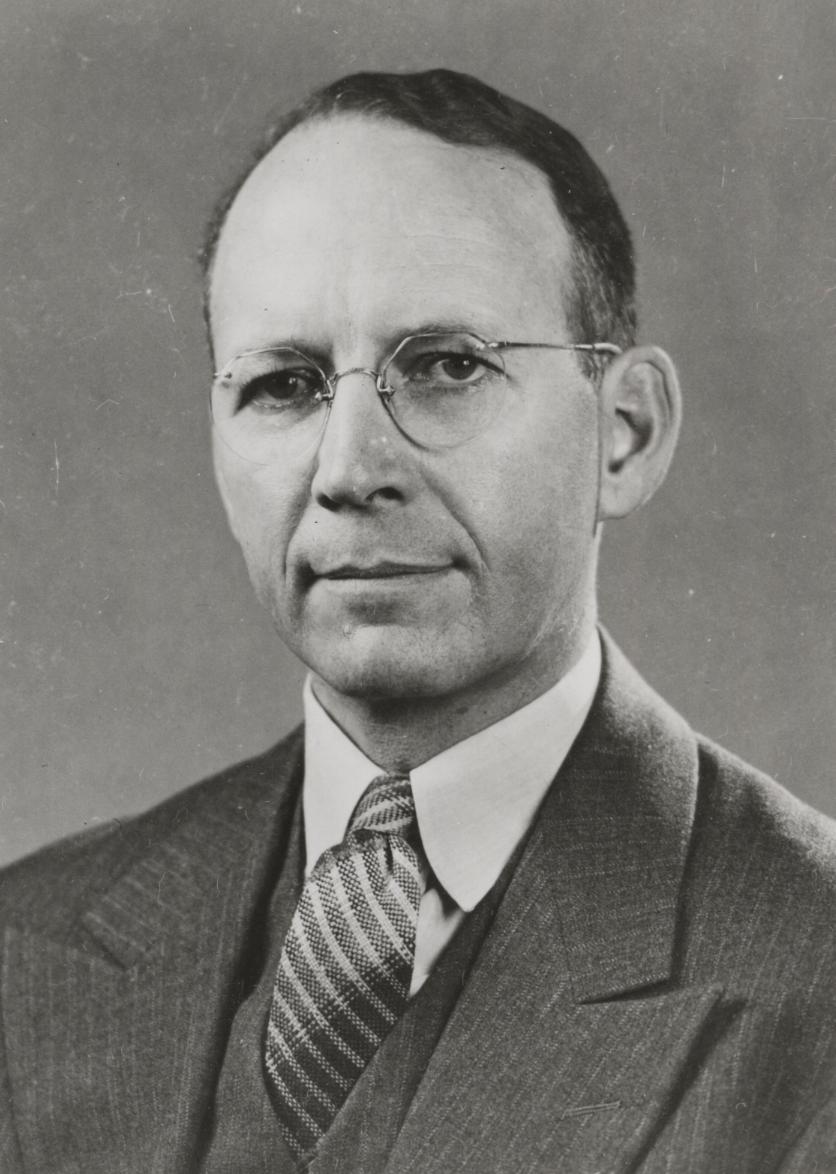
    I have a soft spot for certain wise personalities from the past, such as R.O.B Manley. It’s with this in mind that I wanted to write something in praise of the great C.L. Farrar, who died on 2nd October 1970 in Wisconsin, USA. Yes, Varroa mites have changed the face of beekeeping, but much of the wisdom of the past still applies. The great challenge for one such as I, who is writing a book on apiculture, is to add some value to the mountain of words already written by others. It is a tall order.

    USDA and Bee Research

    Born on 22nd February 1904, Dickinson County, Kansas, Clayton Leon Farrar followed an academic route, with entomology as his chosen wheelhouse. His undergraduate degree was followed by a PhD, and he first taught at the University of Wyoming. Straight away, he plunged into honey bee research, which he continued right until his retirement in 1963. I’m not particularly knowledgable about the history of beekeeping in the USA, not the various structures and institutions that support its research, but I’m aware that Farrar played his part.

    In 1860 William Bruckisch, a German immigrant, suggested that the U.S. Government should conduct investigations in beekeeping. Money was set aside to start research in 1885. The US Department of Agriculture has continued to fund such research, which supports what has become an enormous industry. Farrar rose to the top, becoming responsible for guiding the program from 1958 to 1961.

    Practical Beekeeping

    That’s all well and good, but what I care about is beekeeping, the nitty-gritty practical things which set apart the good beekeeper from the novices. Much of my focus recently has been on modern migratory beekeeping in the UK, but I re-read a paper by Farrar from 1944 called Productive Management of Honeybee Colonies in the Northern States which is a cracker. What follows are some of the things that stand out from that paper for me.

    Farrar was a big proponent of increasing the honey yield per colony. Many of us are familiar with the situation where a couple of hives in an apiary are enormous, providing most of the crop from that site, while other hives languish behind, relatively small and unproductive. To increase your crop, you could set up more hives at more sites, but surely the most obvious productivity gain is from improving those smaller colonies, so that all the hives at a site are monsters. The problem in that area at that time was not that there were too many bees for too few flowers, far from it. What was needed was management practices that ensured that hives were strong in time for the honey flow. They have to grow before the flow rather than on it, to make the most of the available potential.

    Getting the timing right

    As Farrar put it, “Sufficient time must be allowed for building maximum populations for any honey flow. From 5 to 6 weeks are usually required for strong overwintered colonies, consisting of 25,000 to 30,000 bees and 5 to 8 frames of brood, to reach maximum strength, whereas colonies developed from package bees require 10 to 12 weeks. Too often, colonies are developed during the honey flow rather than for the flow.”

    Here in the UK, our weather is hardly reliable; nectar flows will come, but their timing is unpredictable. However, beekeepers will learn through experience the typical patterns of flowering on their patch; the conditions in which they thrive and how weather can accelerate or delay flowering. Things change too, such as the arrival of oilseed rape (canola), varroa mites, large-scale growing of cereal crops and so forth. We know roughly when to expect a flow, and we therefore also know when our colonies need to be getting to peak strength. Occasional feeding may be needed for when things don’t quite go to plan, so that colonies stay strong rather than fall back.

    Prolific Queens and Big Hives

    It comes as no surprise to me that Farrar stressed the importance of prolific queens because only they can produce the monster colonies needed to take advantage of the flow. So, the queen should be capable of laying a great many eggs per day, in a good solid brood pattern. The important thing is being able to identify when a queen is not so good, and to have the fortitude to get rid of her so that a better queen can take her place. These are traits which Farrar says should not be tolerated: non-prolific (small brood nest), spotty brood, bees that sting a lot, or are not quiet on the comb, and those prone to disease (chalk brood springs to mind).

    He recommended using double Langstroth brood boxes for the brood space, with ‘supers’ of at least 3 more deep boxes on top, so 5 deeps (or equivalent). That’s a big hive. “The most productive colonies are those that have a good queen and ample pollen, honey, and hive space at all times. The beekeeper should use a year-round plan of management favourable to the colony, rather than a program of arbitrary seasonal management. Normal queen-right colonies consume more pollen and honey than subnormal colonies, but they also gather more from minor sources to offset the greater consumption. Such colonies are stronger during surplus flows and yield maximum crops.”

    Farrar stated that the amount of nectar collected by a colony falls if they have been queenless for more than two weeks. There was no evidence, he said, to support the idea that going queenless on a flow would increase honey crops (less brood to tend to). He also considered 1st August to be the ‘New Year’ for the beekeeper. Hives must have a good laying queen in early August so that she can lay plenty of winter bees by October. These timings will depend on where you are, of course.

    Winter Preparation

    Diagram of a winter cluster showing how resources are distributed across different frames
    Winter cluster diagram from Farrar’s paper 1944

    As he was writing a paper on beekeeping in the north, Farrar was keen to stress the importance of taking large clusters of bees into winter, with plenty of stored honey and pollen. He suggested at least 60lbs of capped honey stores, split 40/20 between top and bottom brood boxes. He also said 3 to 6 frames of pollen should sit in the middle of the lower box. I have heard about honey stores countless times, but not many people mention frames of pollen when preparing for winter, or maybe I’ve missed something.

    Farrar says, “Colonies provided with ample pollen begin rearing brood in January, and so replace their fall population with young bees by the time new pollen is available in the spring. This brood rearing prevents spring dwindling and often provides colonies strong enough to replace the stores consumed during the winter with nectar produced by willows, dandelions, and fruit bloom.” Perhaps the modern equivalent is adding pollen supplements in spring, although in my area we usually get loads of willow pollen early on. Not as early as January, though. Farrar states that supplements are not as good as real pollen, and even proposes making some hives queenless in summer, which leads to numerous frames of pollen, while sacrificing some honey crop. The pollen frames can then be used in other hives as part of winter preparation.

    I could go on, but if this has piqued your interest, why not download the paper and read the whole thing. It’s great.