Tag: beekeeping book

  • Gifts for Beekeepers

    Gifts for Beekeepers

    Hopefully, if you are reading this at around the time it was posted, you are having some time away from work and enjoying time with family and friends over the holiday season. I’m quite anti-social, not really a Christian (I don’t follow any religion, but try to be spiritual), and a person who abstains from alcohol, so Christmas is not my favourite time. However, it is lovely to see my kids and to exchange gifts. Speaking of which, what about gifts for beekeepers?

    There’s Nothing Like A Dadant Smoker

    Dadant smoker

    My strategy with beekeeping gear, and most other things for that matter, is to buy what I need when I need it. This can be frustrating for those around me who wish to buy gifts; normally I have already bought what I require. The thing is, I know exactly what I want, and a non-beekeeper (or even a different beekeeper) does not. I did give my family a small list (with links to the relevant websites) of things that I would be grateful to receive. Basically, it was a Dadant smoker and some gloves; things that may not appear exciting, but get used often. Hopefully, the gloves won’t get used too regularly, as they go on once the sting count has gone too high!

    Honey House Goodies

    I have bought a few goodies for myself. The more expensive of these are a set of proper calibrated scales, for weighing honey as I jar it, and a ‘DANA api THERMA Straining system’. The bee farmers I spoke to all filter honey before jarring, using around 200-250 micron size, so I thought I should follow suit. The heater should hopefully help the honey to quickly pass through. Accurate weighing scales are also something I should have been using already.

    DANA api THERMA straining system for filtering honey

    Gifts For Beekeepers

    Here are some other ideas for gifts that I imagine many experienced beekeepers would appreciate:

    • a good steel electric extractor
    • An api melter (for cappings, melting out granulated comb, rendering wax, warming honey etc.). These are not cheap!
    • Nucleus hives e.g. Paynes Poly Nuc
    • pre-assembled frames (brood and super)
    • rigger boots (my V12s are great)
    • bee suit or jacket
    • blow torch

    For beginners, I think the best thing they can do is learn about bees and beekeeping, by reading and going on courses:

    • beginners course at the local beekeeping association
    • subscription to BeeCraft, Beekeepers Quarterly, American Bee Journal, Bee Culture
    • Dare I mention my new book?!
    • Or even my other book
    • These really good books

    Here’s something odd; even though I have a lot of delicious honey, I still occasionally buy honey because it is different to mine. I adore heather honey (bell or ling) and I have sampled some interesting stuff such as blueberry, borage and meadowfoam. I’m not suggesting that you buy honey for a beekeeper, but if it is unusual or different to what they have, it can be well received.

    Happy Holidays

    Anyway, I wish all readers a pleasant and peaceful holiday season. Hopefully, you have finished treating your hives with oxalic acid and can take it easy for a while.
  • Healthy Bees, Heavy Hives

    Healthy Bees, Heavy Hives

    How to maximise your honey crop

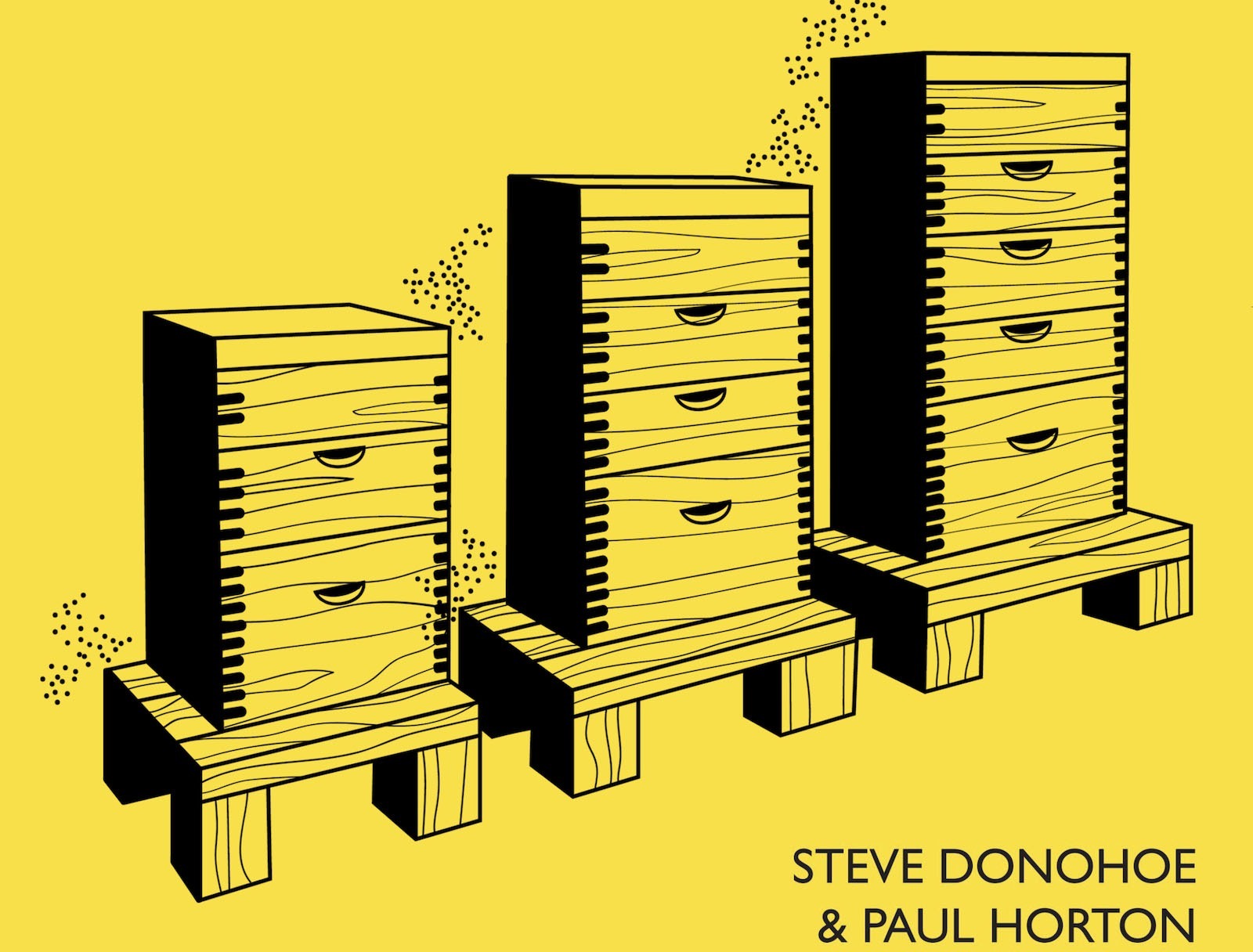
    A new beekeeping book seems to get published every week, so I have joined the party alongside my co-author, Paul Horton. Our new book, Healthy Bees, Heavy Hives — How to maximise your honey crop is likely to be out in February 2024. We miss the crazy Christmas rush, but at least it will be available for purchase from the Northern Bee Books stand at The Beekeeping Show. Actually, let’s be honest, there is no “crazy Christmas rush” for beekeeping books. Or any other time.

    Paul Horton is a well-respected bee farmer based in Lincolnshire. His company is Apidae Honey, and he is the vice chair of the Bee Farmers’ Association (BFA), as well as a regional director. When I was forming the idea for the book, I asked several bee farmers about honey crops, and who were the people who made more than most. Paul’s name often came up, so I talked to him about collaborating on a book. The great thing about Paul is that he had numerous strings to his bow:

    • Very high annual honey crop (well over 130 lbs per colony) every year
    • Former bee inspector, meaning excellent real-life experience of bee health matters
    • Migratory beekeeper
    • He has loads of gorgeous photographs
    • Part of the Knowledge Exchange Groups in the BFA (whereby bee farmers collect and share data for the mutual benefit of all)
    • He knows loads of clever beekeepers, who were happy to help out with the book

    Evidently, this isn’t just a typical, generic book about keeping bees. The bee health chapter is comprehensive and easy to read. The subject of moving bees is covered in great detail, showing exactly how Paul finds places for his bees, and how he safely transports them in his van. If you are thinking of taking bees to pollinate fruit, or to oilseed rape, field beans, mustard, borage, or heather, we’ve got you covered. The chapter on plants for bees is comprehensive and very helpful.

    Luckily, my daughter Isla was available to provide some beautiful illustrations, which take the publication to a new level. Disease diagnosis, swarm control and raising queens are described in words and pictures. Then, of course, there are the photographs. The colour shots are incredible; it’s almost a shame to add text when the images are that good.

    Paul also shares how he extracts, stores and markets his honey. He provides some eye-opening financial information on his operation; few others ever do so, and this can help those interested in going commercial with their planning.

    We were happy to include a piece written by David Wainwright about his style of bee farming, and Thierry Fedon writes about intensive and extensive farming methods. The foreword was kindly written (eventually) by Murray McGregor of Denrosa Apiaries, who appeared as a chapter in my book Interviews with Beekeepers. Murray was kind enough to say:

    Quote by Murray McGregor
    Quote by Murray McGregor

    The chapters are as follows:

    1. General Principles
    2. Getting Bees Through Winter
    3. Early Spring
    4. Bee Hives and Equipment
    5. Queens
    6. Diseases & Pests
    7. Plants For Bees
    8. Swarm Prevention & Control
    9. Migratory Beekeeping
    10. Staying Put
    11. Harvesting, Processing, and Selling Honey

    As you can tell, this blog post is really just a giant advertisement. Sorry about that. Occasionally, these things just have to be done! Paul and I will be doing a bit of promotion for the book after Christmas. Who knows, we may even appear on the odd YouTube channel and podcast. Getting anyone to part with the best part of £30 on a beekeeping book, even one as spectacular as ours, is a tall order. We were inspired by Manley’s Honey Farming and Oliver Field’s Honey By The Ton, so hopefully the writing style and practicality of Healthy Bees, Heavy Hives will be in keeping with those masterpieces.