
One of the best things about being the editor of a beekeeping magazine is that I travel the land meeting commercial beekeepers, recording our chats on my phone, and turn them into articles. I am just a fledgling, barely formed editor, and the number of such interviews is small, but I have already learned a lot, and started to see some patterns. There is something beguiling about beekeeping; I don’t know why, but I find it endlessly fascinating.
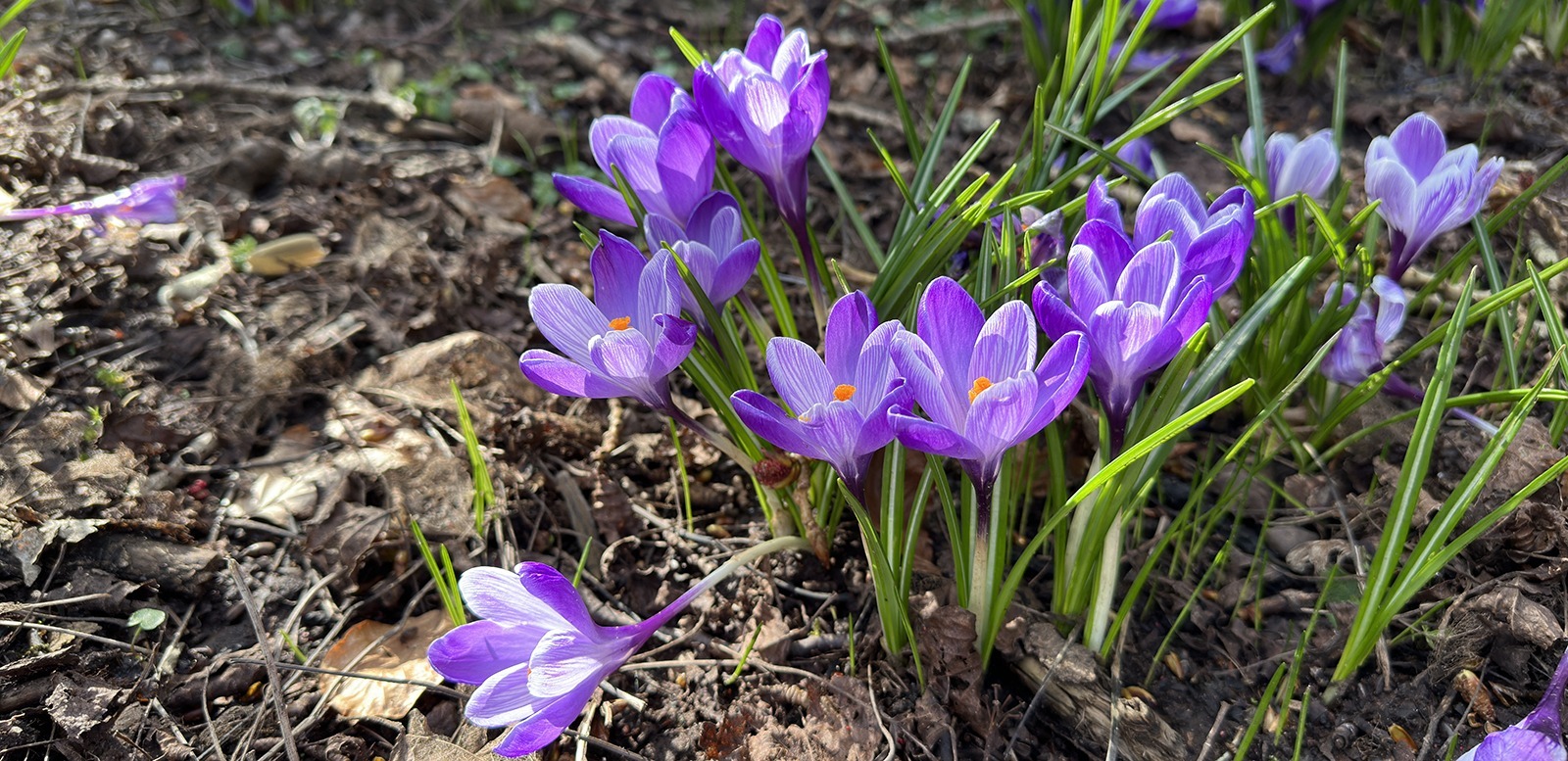
Anyhoo, as somebody in Minnesota might say (I am currently watching Fargo on Prime), the purpose of this short stream of consciousness is to discuss the wonder of springtime, as it pertains to beekeeping. This season, in which new life bursts forth once again, is my favourite. In four to six weeks, depending on the weather, I will hopefully be back inside some hives, checking for queens and brood.
There are numerous variables in beekeeping, each season is different, as is each honey bee colony. What’s more, the location of the bees makes quite remarkable differences in the timing of colony growth in spring from one place to another. Therefore, experience helps. An understanding of what bees are up to, combined with the ability to forecast what that might look like in six weeks’ time, are both gained with experience. Beginners can (and should) borrow the knowledge from an experienced mentor.
Winter Losses
I don’t want to talk about winter losses very much. They happen, and if we do the right things they don’t tend to be high (maybe 10%) but disasters do strike occasionally, and we have to learn from these experiences and move on. I lost nearly all of my bees in my third season because of the havoc wreaked by a storm, and my sloppiness with securing hives and then not carrying out checks after the storm had passed. Lesson learned.
I tend to discover losses as I go around the apiary, checking the weight of hives and nucs. Nowadays, I don’t see much starvation, and I feel ashamed when I do (none this year so far), but it’s easy enough to diagnose. Every so often, a box feels much heavier than the others, and I find that the reason is that the bees have died and robbing hasn’t started yet. My main losses are due to the lack of a queen, or the presence of a drone laying queen. They tend to be higher in nucs than full-sized hives, not sure why.
Whatever the reason, on discovering a dead hive it is a good idea to close up the entrance, make a note, and come back another time to sort it out. Or sort it out there and then if so inclined. I tend to chuck brood frames from dead-outs on the fire, apart from capped stores, and the hive gets taken away and sterilised using a blow torch (wood) or bleach (poly).
Winter Feeding
I use Langstroth boxes and frequently place a partially filled super underneath the brood box in the autumn, then feed with 2:1 syrup until they are heavy. This generally means that my bees do not need feeding in early spring. The brood box tends to be a good size for holding both bees and adequate stores. However, sometimes hives can be light at this time of the year (early March), and I find that this applies fairly regularly to my nucleus colonies.

I went around all of my sites in February and gave fondant to those that seemed to need it, and this practise continues every couple of weeks until the dandelion or blossom flow kicks in. My understanding is that beekeepers going through winter with single National brood boxes are quite likely going to be feeding their bees in the spring, but it depends on the type of bee.
Spring Feeding
Some bees build up a strong brood nest quite early, and these are the ones that can quickly deplete their stores. I don’t think this trait is necessarily ‘good’ or ‘bad’ — it all depends on what the beekeeper is looking for. If you want strong colonies for the oilseed rape (OSR) then it’s a positive. The important thing is to make sure that the bees have food.
For those that wish to accelerate the spring build up of their colonies because they take them to pollinate cherries and apples, or because they target the OSR, feeding some kind of pollen supplement/substitute might be worthwhile. Beekeepers often feel that what they are doing may not be needed by the bees, but at least it is there in the hive if it is needed. A beekeepers’ ‘comfort blanket’ of sorts. Personally, I find that we have pollen available near my apiaries for most of the year, and I don’t have huge hive numbers at each site, so a protein boost is probably not needed. However, if we suddenly get snow for a prolonged period in March or April, as sometimes happens, that supplementary protein might be critical. As ever, it all depends …
I know bee farmers that swear by giving hives a ’stimulative feed’ of 1:1 syrup once temperatures start to rise in spring. This can accelerate the laying of the queen. It is a small bucket of syrup, for consumption rather than storing, and not a giant amount that will clog up the cells, or sit there untouched for weeks. Many people use thymol in syrup to eliminate the risk of fermentation. In my area, this would probably be in early April, but who knows what the weather gods will send our way?
Colony Sizes
There can be a big difference between the size of colonies in springtime. It’s just the way the natural world works; one of those ‘bell shaped curves’ that we studied in mathematics all those years ago. At either end of the curve are the outliers; colonies that are either super-strong or, conversely, looking weak and a bit backward. Many colonies will have reproductive swarming as their goal, what with procreation being necessary for the continuation of the species, and the big colonies will be the first to go.
What about the smaller colonies? What is wrong with them? It could be that nothing is wrong; not all bees build up early, and maybe these will be monsters in July. It’s worth checking for any signs of disease, or something wrong. There may be signs of dysentery, or perhaps the queen is old and laying poorly, or young and poorly mated (drone layer)? There should be brood in the hive in spring, so if she is not laying at all, that’s a big problem. If no good reason can be found for a colony being small, by which I mean about three frames of bees, then they could be boosted using resources from one of the giant colonies (the ones that will swarm unless action is taken). If it is smaller than three frames, I generally take the view that something is wrong, even if I can’t see what it is, and I get rid of them.
When boosting small colonies with bees and brood from large colonies (equalisation) it is important to be confident that the hives are healthy. Furthermore, by keeping this at an apiary level, rather than moving frames between apiaries, the risks of spreading disease are reduced. I use nitrile gloves when inspecting colonies — a brand-new pair for each apiary. Any brood moved to a smaller colony should be ‘emerging brood’ so that it quickly adds to worker numbers. I move frames with bees on them, and I don’t usually see much fighting. Another trick is to swap the positions of a strong and a weak colony (as well as move some brood) so that the weaker colony picks up the foragers from the stronger one.
Swarm Prevention
I think that the main focus needs to be on the colonies that have a lot of brood early on. These are the ones that will be closer to making swarm cells, although, of course, that malarkey doesn’t really get going until drones are about. In a Langstroth brood box, I’m content with up to five frames containing brood. The odd hive that contains a ‘laying machine’ — those with six or seven frames with brood on (or more) need to be taken down a peg or two as part of swarm prevention. Moreover, there has to be space for the queen to lay, space for bees, and for any nectar coming in.
Here are some of the things that people do to persuade honey bees not to make queen cells:
- Remove emerging brood frames (with attached bees) and use them to boost smaller colonies, or to make up nucleus colonies (you need a mated queen for the nuc, ideally). Alternatively, use the brood frames to make up a cell-builder for raising queens (May/June in my area).
- Place a brood box that contains a small (but healthy) colony above a strong one, with an excluder between (Ian Steppler does this). A few weeks later, the colony strengths tend to have equalised, and they can be separated again.
- Swap the positions of a strong and weak colony
- Place a box of foundation over a strong colony, moving a frame of brood from below to the centre of the top box (and a frame of foundation downstairs to the edge of the brood nest). The young bees should get on with drawing out the comb, providing plenty of space. It depends on the weather and availability of nectar/syrup.
- Perform a Demaree (something done before queen cells are in the hive), which provides plenty of space for the queen to lay in the bottom box, with brood in the box above. Manley found that success depended on good weather, but others swear by it. You will need help later on, as the upper brood box will fill up with honey.
- Keep young queens in production colonies, and any in their third season that you want to keep go into a nuc, to be used as breeding material.
- Selectively breed queens that have a low swarming impulse, i.e. don’t let a swarmed colony re-queen itself
Healthy Bees, Heavy Hives
Finally, if you have read the new book and have something positive to say about it, please leave a review on Amazon and spread the word. We think we wrote a good book, but it will only sell if readers think so too, and tell other beekeepers. Thanks!

Feel free to add a polite comment!